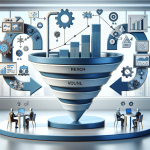

Artificial intelligence (AI) is significantly transforming marketing strategies, particularly through the development of AI-driven marketing funnels. These funnels guide potential customers through distinct stages: awareness, consideration, and decision-making. AI technologies enhance these funnels by automating processes, improving conversion rates, and personalizing customer interactions based on individual preferences and behavior patterns.
In the current digital environment, consumer behavior changes rapidly, requiring businesses to continuously adapt their marketing approaches. Traditional marketing methods often struggle to address the complexity of modern consumer interactions. AI-driven marketing funnels address this challenge by utilizing data analytics, machine learning, and automation to create responsive and adaptive marketing systems.
These technologies enable businesses to analyze customer data in real time, predict consumer behavior, and deliver targeted messaging at optimal moments in the customer journey. The implementation of AI in marketing funnels provides measurable benefits, including increased operational efficiency, improved customer engagement, and higher conversion rates. For businesses operating in competitive markets, adopting AI-driven marketing strategies has become increasingly important for maintaining market relevance and achieving sustainable growth.
Key Takeaways
- AI enhances marketing funnels by automating and optimizing customer journeys from awareness to conversion.
- Advanced AI techniques improve customer segmentation and targeting for more precise marketing efforts.
- Personalization powered by AI increases engagement by delivering tailored content and offers.
- AI-driven lead scoring and nurturing streamline the sales process, focusing efforts on high-potential prospects.
- Implementing AI in marketing funnels presents challenges but promises significant future advancements and efficiencies.
Understanding the Role of Artificial Intelligence in Marketing Funnels
To truly appreciate the impact of AI on marketing funnels, I must first understand its role within this framework. At its core, AI serves as a powerful tool that analyzes vast amounts of data to identify patterns and trends that would be impossible for humans to discern alone. By harnessing this capability, marketers can gain insights into customer behavior, preferences, and pain points.
This data-driven approach allows me to create more effective marketing strategies that resonate with my target audience. Moreover, AI enhances the efficiency of marketing funnels by automating repetitive tasks. For instance, I can utilize AI algorithms to manage email campaigns, segment audiences, and even predict customer behavior based on historical data.
This automation not only saves time but also ensures that my marketing efforts are consistently aligned with customer needs. As I navigate through the intricacies of AI-driven marketing funnels, I am continually amazed by how these technologies can transform raw data into actionable insights that drive business growth.
How AI Improves Customer Segmentation and Targeting
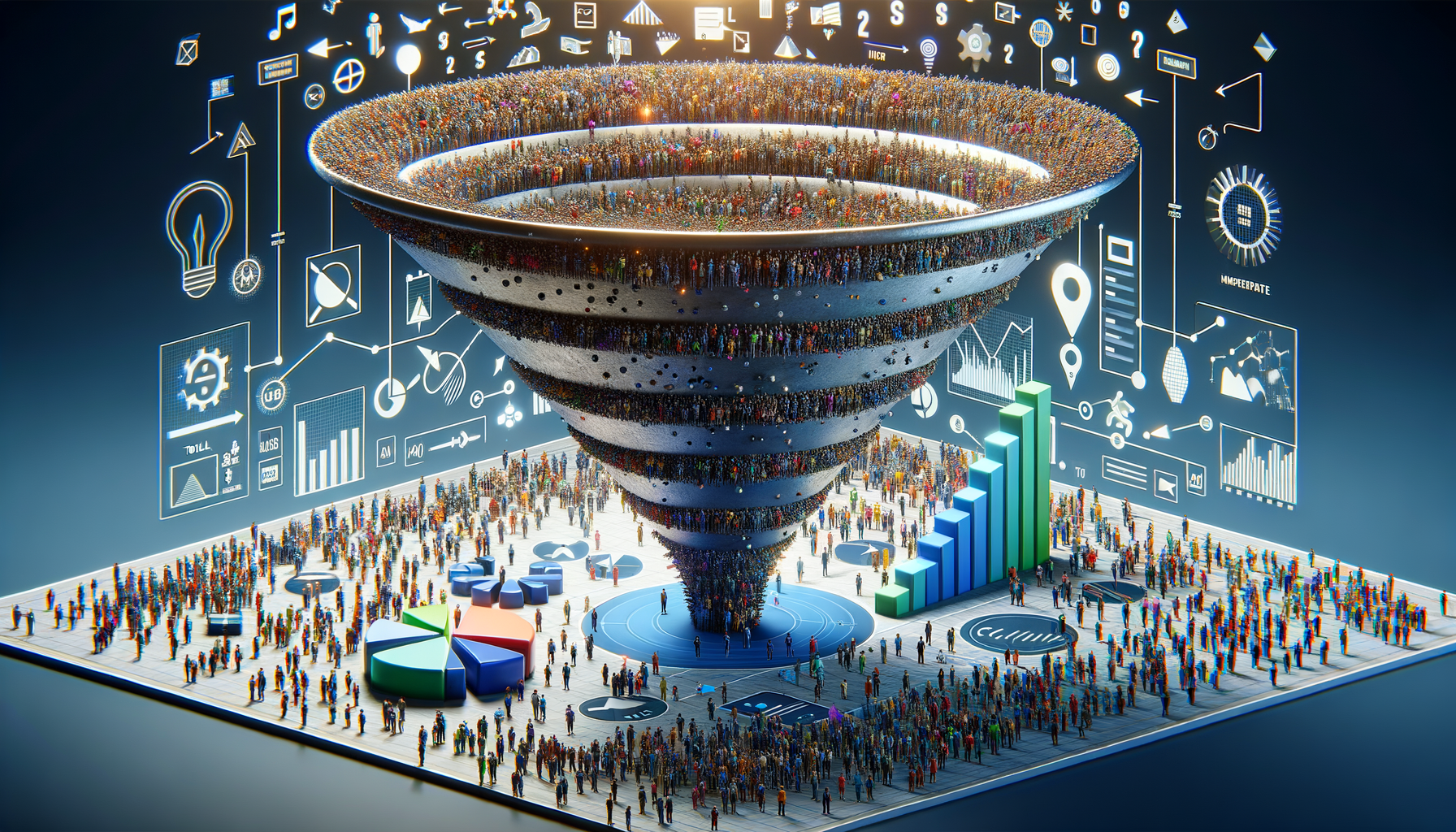
One of the most significant advantages of incorporating AI into marketing funnels is its ability to improve customer segmentation and targeting. In my experience, understanding the nuances of different customer segments is crucial for crafting tailored marketing messages. AI enables me to analyze demographic data, online behavior, and purchasing history to create highly specific customer profiles.
This level of granularity allows me to target my marketing efforts more effectively, ensuring that I reach the right audience with the right message at the right time. Additionally, AI can dynamically adjust segmentation based on real-time data. For example, if I notice a shift in consumer behavior or preferences, AI algorithms can quickly re-evaluate existing segments and suggest new targeting strategies.
This adaptability is invaluable in a world where consumer trends can change overnight. By leveraging AI for customer segmentation, I can enhance my marketing funnels’ effectiveness and ultimately drive higher conversion rates.
Personalization and AI-Driven Marketing Funnels
Personalization has become a cornerstone of successful marketing strategies, and AI plays a pivotal role in achieving this goal within marketing funnels. As I engage with customers across various touchpoints, I recognize that delivering a personalized experience is essential for building trust and loyalty. AI enables me to analyze individual customer data and tailor content accordingly.
Whether it’s personalized product recommendations or customized email campaigns, AI helps me create experiences that resonate with each customer on a personal level. Moreover, the power of AI extends beyond simple personalization; it allows for predictive personalization as well. By analyzing past interactions and behaviors, AI can anticipate future needs and preferences.
For instance, if a customer frequently purchases fitness-related products, I can proactively suggest new items or content that aligns with their interests. This level of personalization not only enhances the customer experience but also fosters deeper connections between brands and consumers.
The Impact of AI on Lead Scoring and Nurturing
In my journey through the realm of marketing funnels, I have come to appreciate the importance of lead scoring and nurturing in converting prospects into loyal customers. AI significantly enhances these processes by providing more accurate assessments of lead quality. By analyzing various data points—such as engagement levels, demographic information, and behavioral patterns—AI algorithms can assign scores to leads based on their likelihood to convert.
This allows me to prioritize my efforts on high-potential leads while nurturing those who may need more time or information. Furthermore, AI-driven nurturing strategies enable me to deliver timely and relevant content to leads throughout their journey. For example, if a lead shows interest in a specific product category but hasn’t made a purchase yet, I can use AI to trigger targeted follow-up emails or retargeting ads that address their specific interests.
This level of tailored communication not only keeps leads engaged but also increases the chances of conversion as they move through the funnel.
Optimizing Conversion Rates with AI-Driven Marketing Funnels

As I strive to optimize conversion rates within my marketing funnels, I find that AI offers invaluable insights and tools to enhance performance. One of the key ways AI contributes to this optimization is through A/B testing and predictive analytics. By running experiments on different marketing strategies—such as varying ad copy or landing page designs—I can leverage AI to analyze which variations yield the best results.
This data-driven approach allows me to make informed decisions that maximize conversion rates. Additionally, AI can identify bottlenecks within the funnel that may hinder conversions. For instance, if I notice a significant drop-off at a particular stage in the funnel, AI can help diagnose potential issues—whether it’s a lack of compelling content or an overly complicated checkout process.
Armed with these insights, I can implement targeted improvements that streamline the customer journey and ultimately drive higher conversion rates.
Challenges and Considerations in Implementing AI-Driven Marketing Funnels
While the benefits of AI-driven marketing funnels are substantial, I must also acknowledge the challenges associated with their implementation. One significant hurdle is the need for high-quality data. For AI algorithms to function effectively, they require access to accurate and comprehensive data sets.
In my experience, many organizations struggle with data silos or incomplete information, which can hinder the effectiveness of AI-driven strategies. Moreover, there is often a learning curve associated with adopting new technologies. As I integrate AI into my marketing efforts, I must invest time in understanding how these systems work and how to interpret their outputs effectively.
Additionally, there may be resistance from team members who are accustomed to traditional methods. Overcoming these challenges requires a commitment to continuous learning and adaptation as I navigate this evolving landscape.
The Future of AI-Driven Marketing Funnels
Looking ahead, I am excited about the future of AI-driven marketing funnels and their potential to revolutionize how businesses connect with customers. As technology continues to advance, I anticipate even greater levels of personalization and automation within marketing strategies. The integration of emerging technologies—such as natural language processing and advanced machine learning—will further enhance my ability to understand and engage with customers on a deeper level.
Moreover, as consumers become more aware of data privacy concerns, I recognize the importance of balancing personalization with ethical considerations. The future will likely see an increased emphasis on transparency and trust in how businesses utilize customer data. As I embrace these changes, I am committed to fostering relationships built on trust while leveraging the power of AI to create meaningful connections with my audience.
In conclusion, my exploration of AI-driven marketing funnels has revealed a landscape rich with opportunities for innovation and growth. By harnessing the power of artificial intelligence, I can enhance customer segmentation, personalization, lead nurturing, and conversion optimization—all while navigating the challenges that come with implementing these advanced technologies. As I look toward the future, I am eager to embrace the possibilities that lie ahead in this dynamic field.
In the realm of AI-driven marketing, understanding how to effectively utilize automation can significantly enhance your strategies. For those looking to delve deeper into the intersection of automation and marketing, a great resource is the article on how webinars and automation can build your mailing list and scale your business. This piece provides valuable insights into leveraging technology to optimize your marketing funnels and improve overall engagement.